
For decades, Surat was synonymous with one thing: the shimmering elegance of the Indian Saree. Known affectionately as the "Silk City of India," it dominated the women’s ethnic wear market. But if you are a retailer, a boutique owner, or a clothing distributor in 2024, clinging to that old reputation means you are leaving money on the table.
Over the last fifteen years, a quiet revolution has taken place on the bustling streets of Ring Road and the industrial hum of Pandesara. Surat has transformed into a colossal engine for men’s wholesale clothing. From high-quality shirting fabrics to ready-made Sherwanis and denim, Surat has eclipsed traditional hubs to become the go-to destination for sourcing men's fashion.
Why are global brands and savvy retailers shifting their gaze to this coastal city in Gujarat? The answer lies in a potent combination of vertical integration, unmatched cost benefits, and a staggering variety of fabrics.
The Vertical Advantage: From Fiber to Fashion
To understand why Surat is the "Global Hub," you must understand the supply chain. In most manufacturing cities, the yarn comes from one place, the weaving happens in another, and the dyeing is done in a third. Surat disrupts this model.
Surat is home to over 650,000 power looms and hundreds of massive dyeing and printing mills. This vertical integration means that a wholesale menswear manufacturer in Surat often controls the entire lifecycle of the garment.
The "Farm to Fashion" Speed
Because the weaving, processing, and stitching happen within a 20-kilometer radius, the turnaround time for new trends is lightning fast. If a specific print trends in Milan or Paris, Surat manufacturers can replicate, print, and stitch it into men's shirts within weeks, not months. For a retailer, this agility is the difference between catching a trend and missing it.
Exploring the Cost Benefits: Why Sourcing Here Increases Margins
The primary driver for any wholesale buyer is the bottom line. Sourcing directly from Surat manufacturers offers a pricing structure that is difficult to replicate elsewhere in India or even Southeast Asia.
1. Elimination of Middlemen
The traditional textile supply chain is clogged with agents. By the time a shirt reaches a wholesaler in Mumbai or Delhi, it has passed through three sets of hands, each adding a 15-20% markup. In Surat, the "wholesaler" is often the factory owner. Buying directly from markets like the New Bombay Market or Millennium Textile Market allows you to secure factory-gate pricing.
2. Economies of Scale
Surat produces approximately 40 million meters of fabric per day. This sheer volume drives down the per-unit cost of production significantly. Whether you are looking for polyester blends, viscose, or cotton shirting, the massive output allows manufacturers to operate on thinner margins while still remaining profitable—savings that are passed on to you.
3. The Synthetic Edge
While pure cotton is expensive, Surat is the undisputed king of Man-Made Fibre (MMF). The city produces high-quality synthetic blends (like Terry-Rayon) that mimic the look and feel of expensive wool or Egyptian cotton at a fraction of the price. For men’s formal wear—trousers, suits, and blazers—this allows retailers to offer premium-looking products at mass-market prices.
Unmatched Variety: Beyond Just Shirts
A common misconception is that Surat only produces fabric rolls. Today, the city is a powerhouse for Ready-Made Garments (RMG).
The Ethnic Wear Capital
If your inventory includes men's ethnic wear, Surat is non-negotiable. It is the largest producer of:
-
Kurtas and Kurta Pajama Sets: Ranging from simple daily wear to heavy festive wear.
-
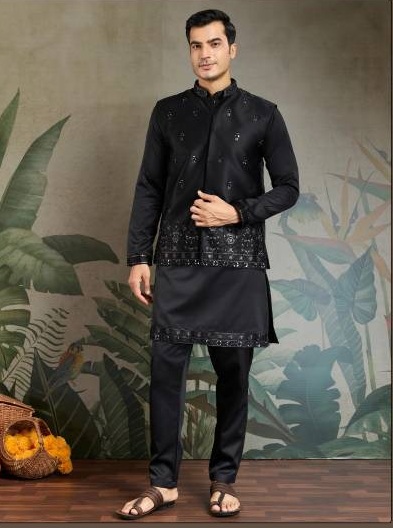
Sherwanis and Indo-Western Suits: Utilizing the city's famous embroidery machinery to create high-value wedding attire at wholesale rates.
The Denim and Casual Boom
With the establishment of massive washing units, Surat has aggressively entered the jeans market. You can now source:
-
Heavy-wash denim jeans
-
Digital print shirts (A major trend in men's resort wear)
-
Lycra trousers and cargo pants
Industry Insight: "Surat’s ability to digitally print on almost any fabric has revolutionized men's casual shirts. Retailers can now order 100 different designs in a single lot, rather than being stuck with thousands of the same pattern."
Strategic Sourcing: Examples of Retail Success
To illustrate the tangible benefits, let's look at how different types of buyers leverage Surat.
Example A: The Startup Boutique Owner
-
The Challenge: Needs high variety but has a low budget. Can’t afford to buy 1000 pieces of one design.
-
The Surat Solution: The owner visits the Surat Textile Market (STM). They find a manufacturer offering "Set-wise" buying.
-
The Result: They buy 50 different shirt designs (12 pieces per design) in high-quality digital print rayon. The cost is ₹200 ($2.40) per shirt. They retail it for ₹800 ($9.50), securing a 300% margin.
Example B: The Bulk Wholesaler/Distributor
-
The Challenge: Needs 50,000 pairs of formal trousers for a chain of budget retail stores. Needs consistent quality and rock-bottom pricing.
-
The Surat Solution: They source directly from a mill in the Pandesara Industrial Estate. They opt for a Poly-Viscose blend (PV) which is durable and wrinkle-free.
-
The Result: By negotiating a direct manufacturing contract, they secure the trousers at ₹180 ($2.15) per piece. Competitors sourcing from traders in other cities are paying ₹240 for the same quality.
Navigating the Hub: Where to Go?
If you plan to visit, you must know where to look. Surat is not organized like a typical western city; it is a cluster of mega-markets.
-
Ring Road: The artery of the textile trade. Hundreds of multi-story markets line this road.
-
New Bombay Market: Famous specifically for wholesale pricing and ready-made garments.
-
Avadh Textile Market: A newer hub known for premium fabrics and men's ethnic wear.
-
Udhyog Nagar / Pandesara: If you are looking for textile mills and large-scale manufacturing units rather than trading shops, this is where you go.
Conclusion
Surat has successfully shed its image as a "saree-only" city. By leveraging its massive infrastructure for man-made fabrics, it has democratized fashion, making high-quality menswear accessible and affordable.
For the modern retailer, the question is no longer if you should source from Surat, but how quickly you can establish a supply chain there. The combination of low manufacturing costs, high-speed production, and incredible variety makes Surat not just a domestic leader, but the undisputed global hub for men’s wholesale clothing.
Are you ready to transform your inventory and margins? Start by researching suppliers in the Ring Road area or planning a visit to the upcoming textile expo in Surat.
FAQ’s: Sourcing Menswear from Surat
Q1: What is the Minimum Order Quantity (MOQ) when buying from Surat manufacturers? A: This varies by supplier. Traders in markets like New Bombay Market may sell "set-wise" (e.g., 4 sizes of one color), allowing for MOQs as low as 20-50 pieces total. However, direct manufacturers usually require higher MOQs, typically ranging from 100 to 500 pieces per design.
Q2: Is Surat good for pure cotton clothing, or only synthetics? A: Surat is globally famous for synthetic blends (Polyester, Viscose, Rayon). While you can find pure cotton, cities like Tirupur (for knits) or Ahmedabad (for cotton woven) are traditionally stronger in 100% cotton. However, Surat excels in cotton blends which offer the comfort of cotton with the durability and lower cost of synthetics.
Q3: How do I ensure quality when sourcing from a distance? A: Always request a sampling procedure. reputable manufacturers will send fabric swatches or a sample garment before you commit to a bulk order. For large orders, it is highly recommended to hire a third-party quality inspection agency based in Surat to check the goods before dispatch.
Q4: Can Surat manufacturers handle international shipping? A: Yes. Surat is a major export hub with excellent connectivity to the Hazira Port. Most established manufacturers are experienced in export documentation and have tie-ups with international logistics partners to ship to the USA, UK, UAE, and Africa.
Q5: What are the most popular men's clothing items to source from Surat? A: currently, the highest value items are digitally printed shirts, Indo-western sherwanis, kurta pajama sets, and formal trousers made from Poly-Viscose fabrics.
Q6: Do manufacturers in Surat offer white-labeling services? A: Yes, many manufacturers offer OEM (Original Equipment Manufacturer) services. They can stitch your brand labels and tags onto the garments, provided you meet their specific MOQ requirements for custom branding.